Manage Tax Regions
Learn what tax regions are and how to manage them in the vendor dashboard.
On this page
In this guide, you'll learn what tax regions are and how to manage them.
What is a Tax Region?
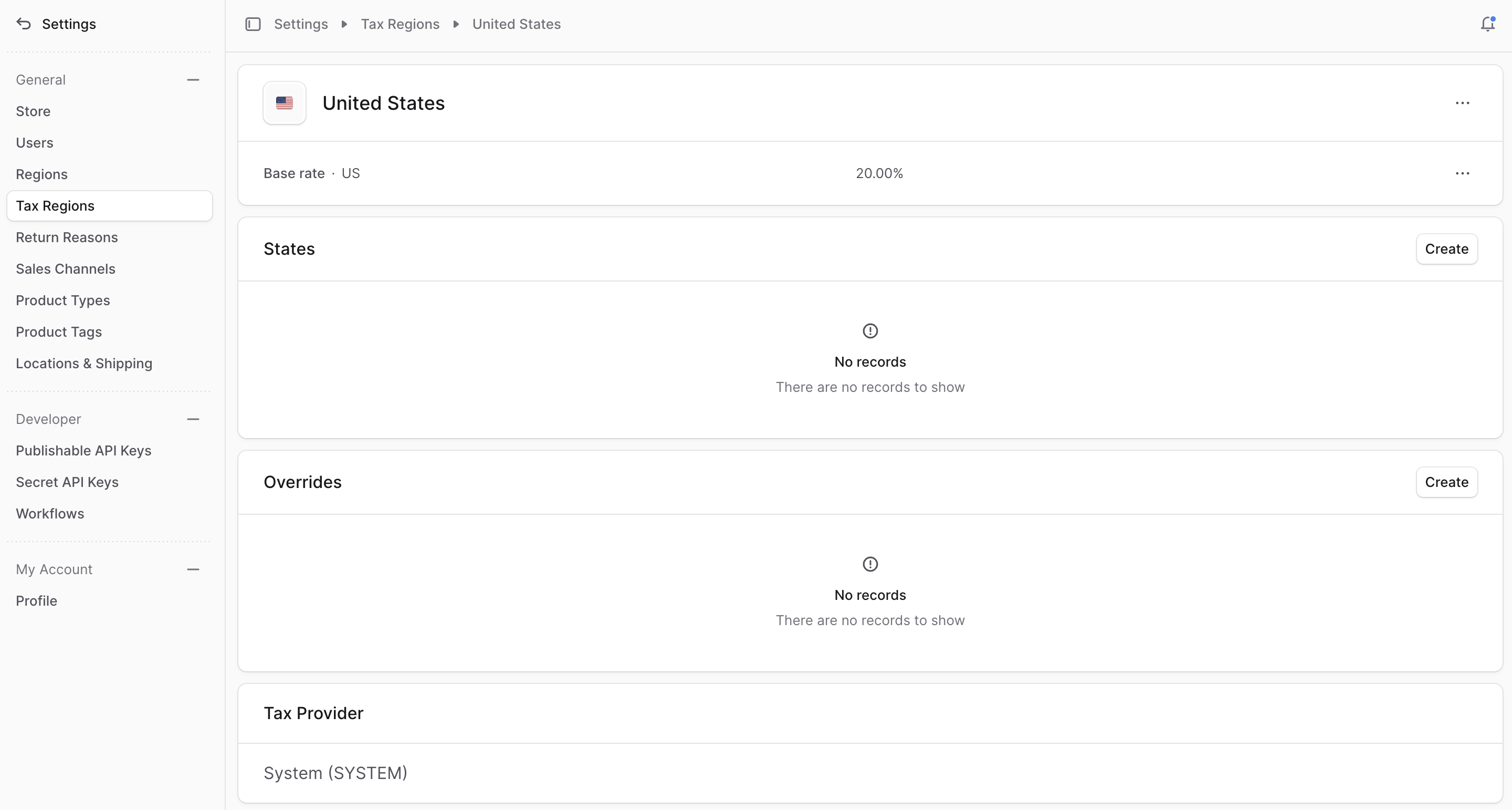
A tax region represents a geographical area where you must apply specific tax rates. For example, if you operate in the United States and Canada, you might have different tax rates for each country, and even in different states or provinces within each country.
In this case, you can create a tax region for each country you operate in and set up sublevel tax regions for each state or province within the country.
Each tax region has its own tax rate, and you can override the default tax rate in a region for specific products or product types.
View Tax Regions
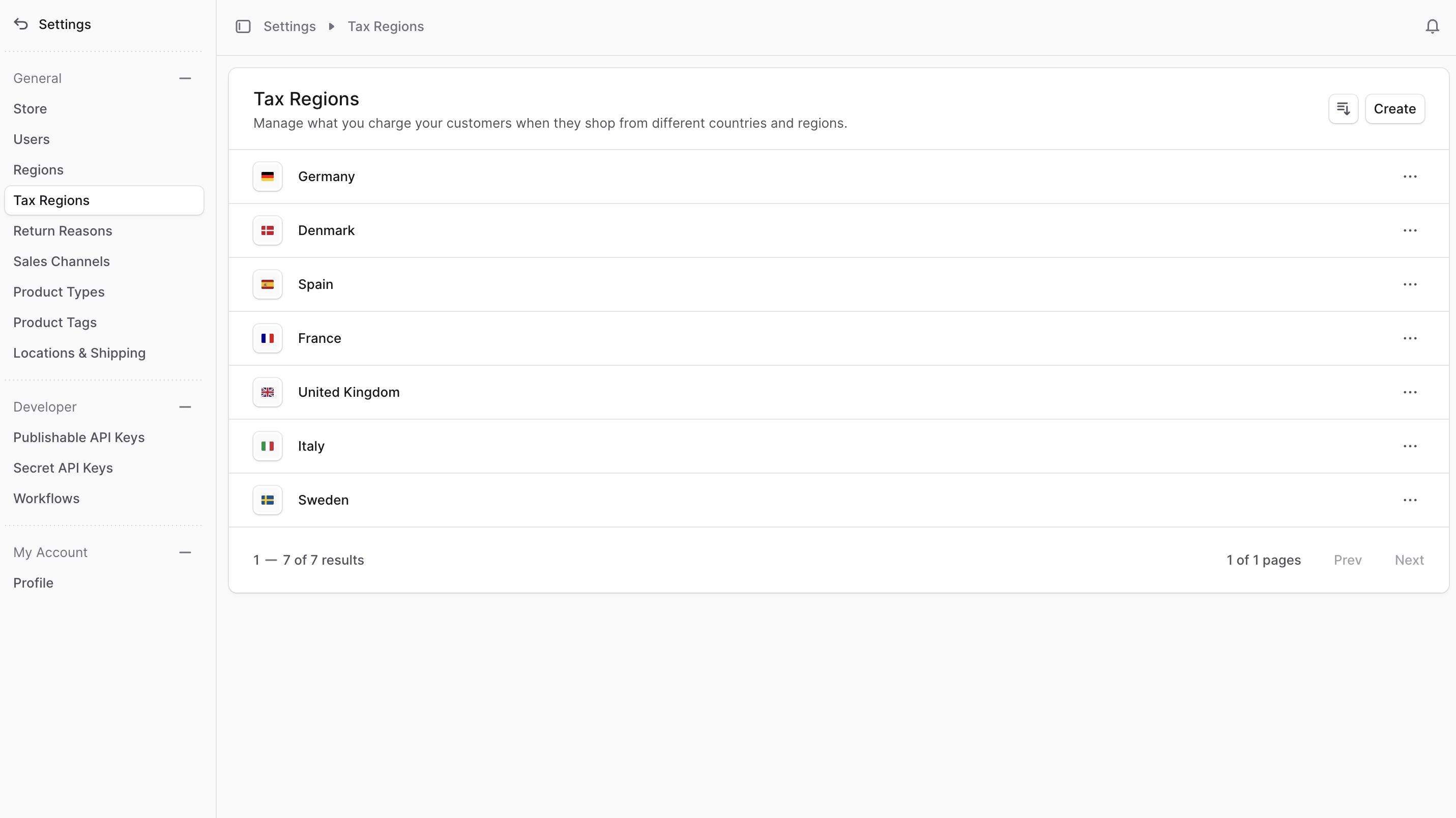
To view tax regions in your store, go to Settings → Tax Regions. Here, you can see a list of all the tax regions you have set up. You can also search, filter, and sort the tax regions to find the one you are looking for.
Create Tax Region
To create a tax region:
- Go to Settings → Tax Regions.
- Click Create in the main section's header.
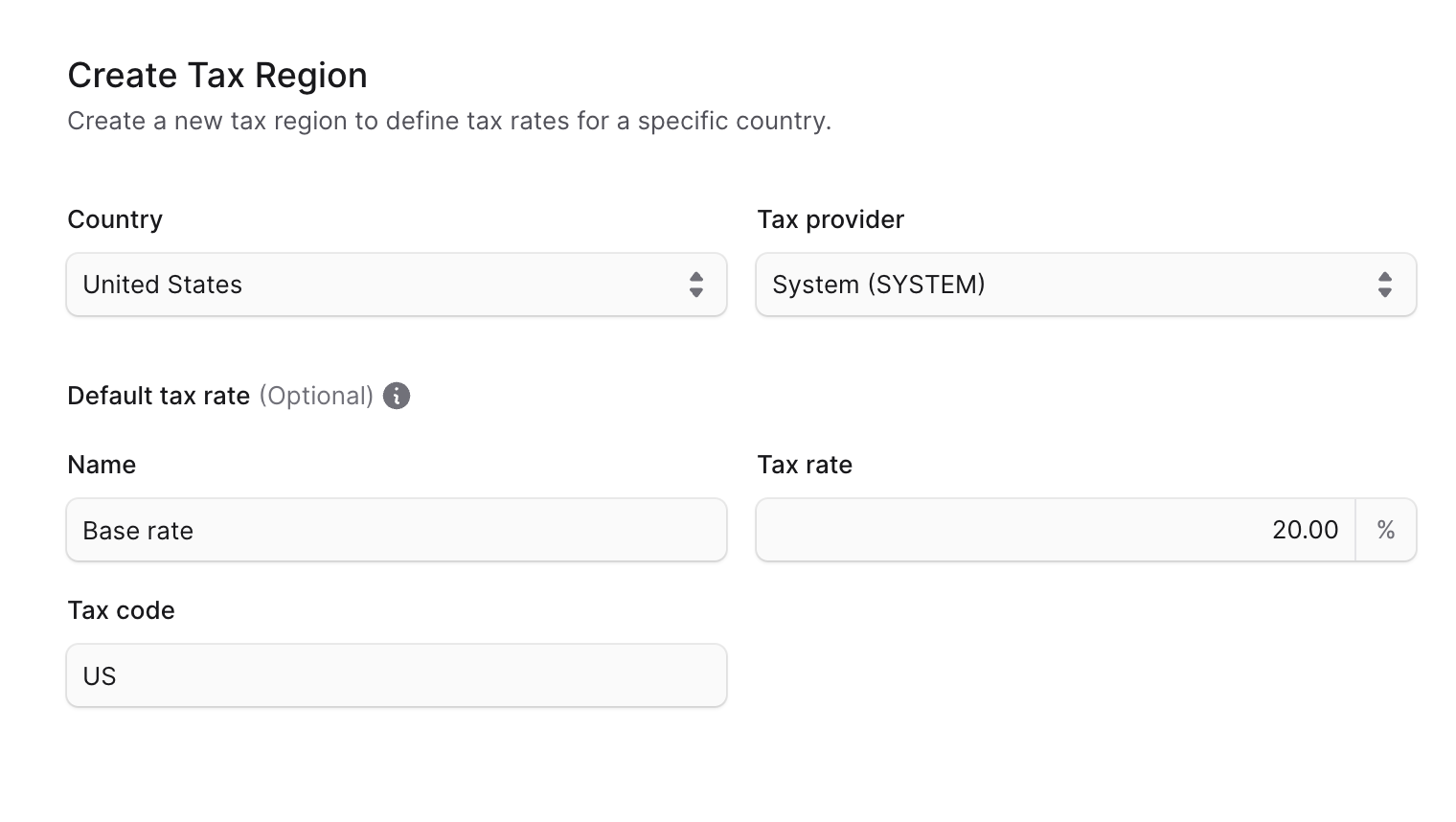
- In the form that opens:
- In Country, select the country that this tax region applies to.
- Under Default tax rate, optionally enter a name, tax rate, and tax code.
- When you're done, click Save.
View Tax Region Details
To view the details of a tax region:
- Go to Settings → Tax Regions.
- Click a tax region from the list.
This opens the tax region's details page, where you can also manage the tax region.
Edit Tax Region
To edit a tax region:
- Go to the tax region's details page.
- Click the three-dot menu at the end of the tax region's row.
- Choose Edit from the dropdown.
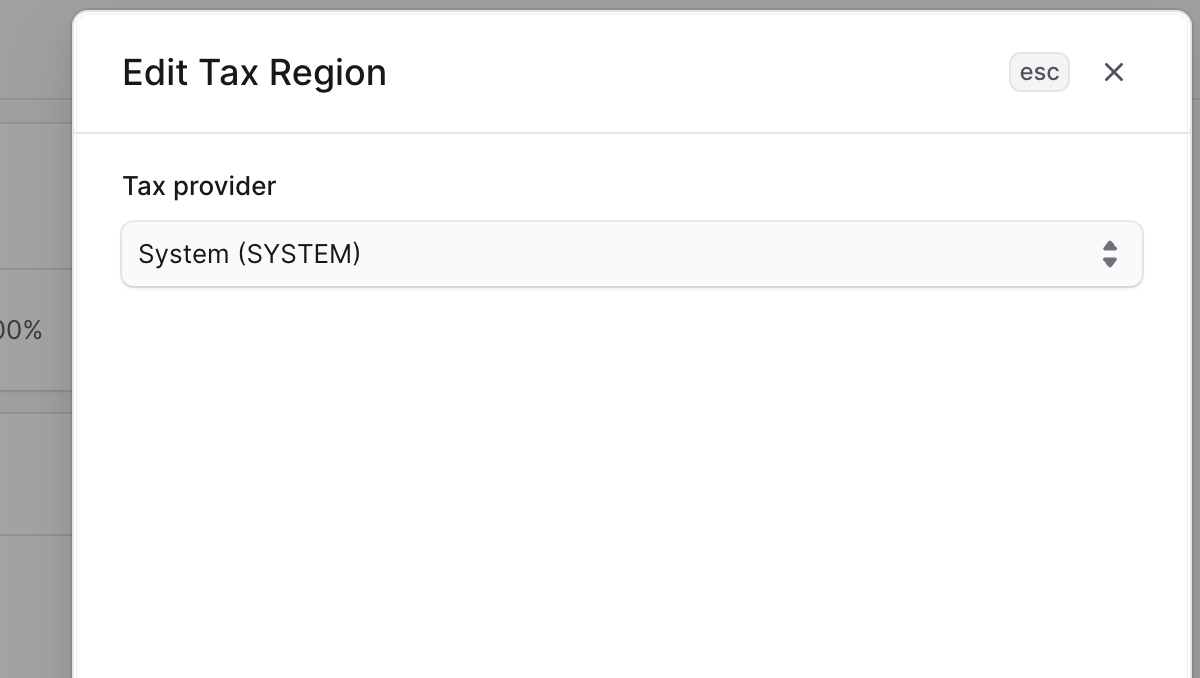
- In the side window that opens, edit the tax region's default tax provider.
- When you're done, click Save.
Edit Default Tax Rate
To edit the default tax rate of a region:
- Go to the tax region's details page.
- In the first section, you'll find details of the default tax rate, including its tax rate and code. Click the three-dot menu at its end.
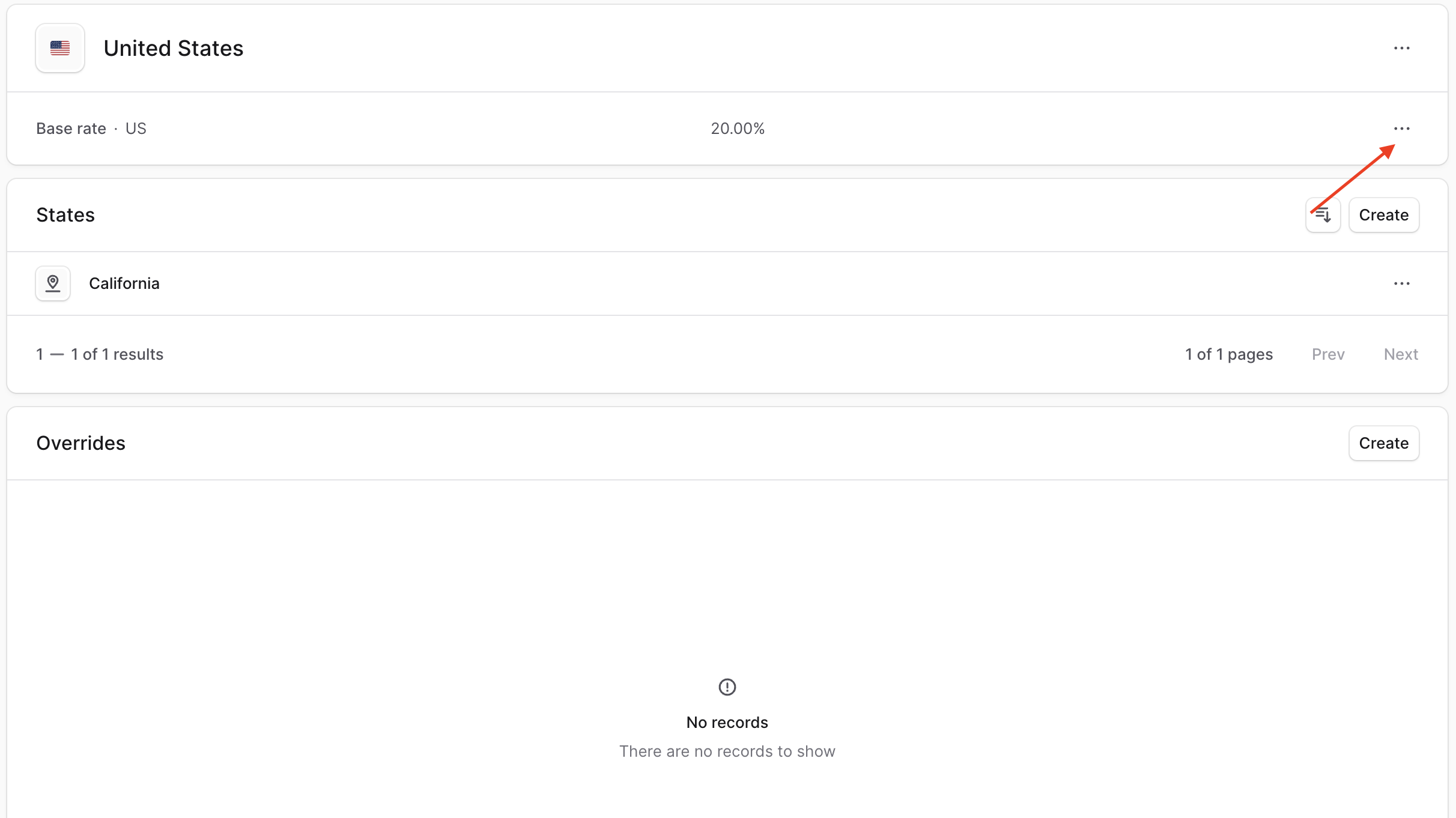
- Choose Edit from the dropdown.
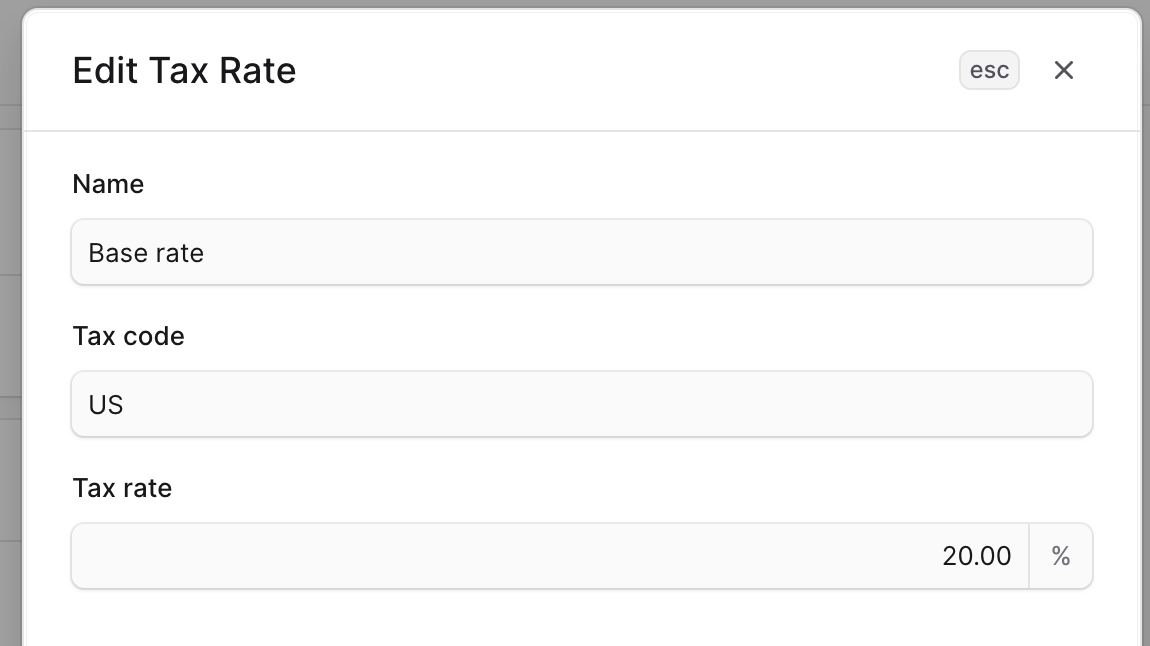
- In the side window that opens, edit the tax rate's name, code, and rate to charge.
- When you're done, click Save.
Manage Tax Rate Overrides
You can override the default tax rate of a region for specific products, product types, or shipping options. This is useful if you have different tax rates for certain products or shipping options in a region.
You can override tax rates for tax regions and sublevel tax regions.
Create Tax Rate Override
To create a tax rate override for a product or product type in a tax region:
- Go to the region's details page.
- In the Overrides section, click Create.
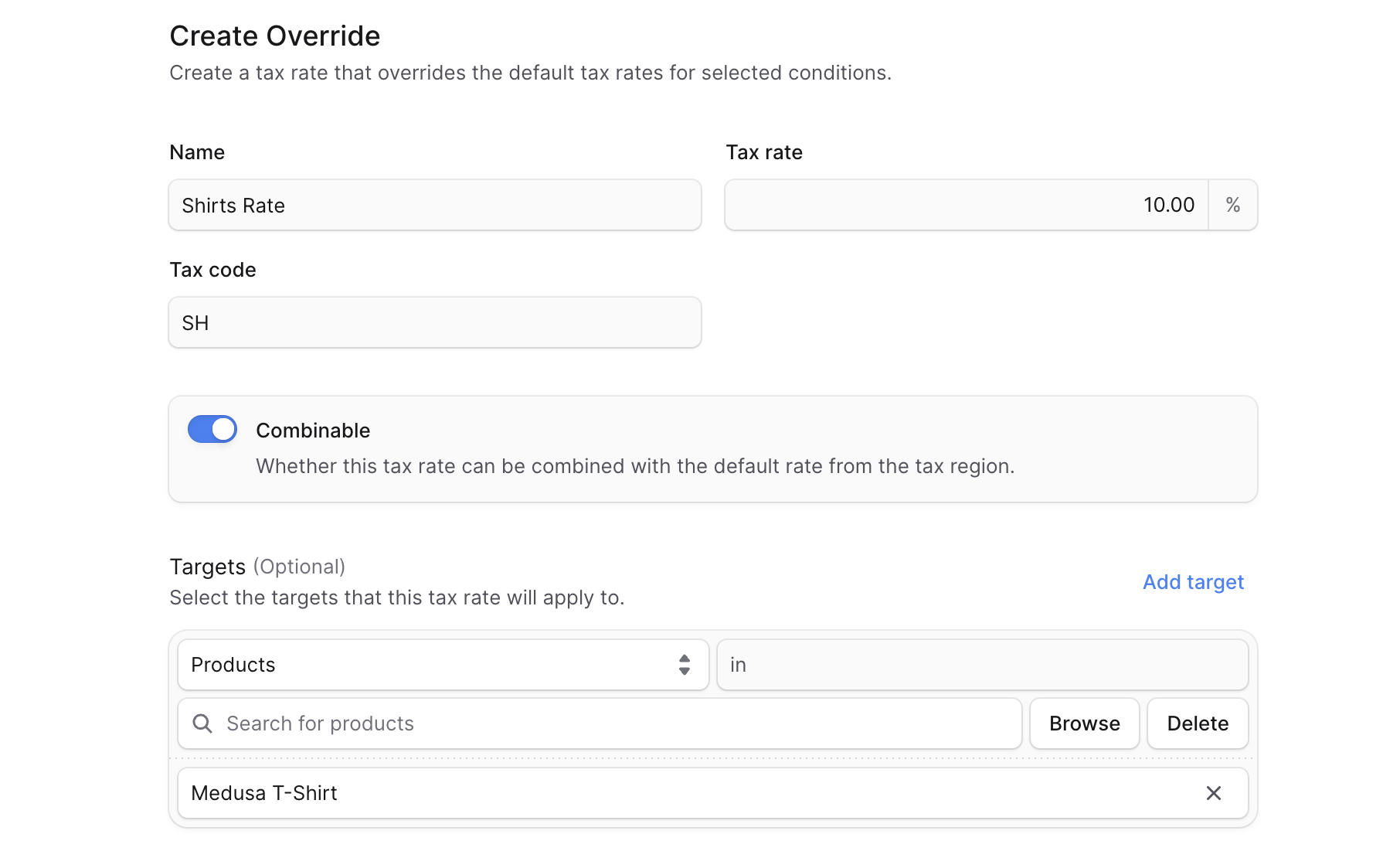
- In the form that opens:
- Enter the tax override's name, rate, and code.
- If the override is for a sublevel tax region and should be combined with the parent region's tax rate, enable Combinable. This option only applies to sublevel (province or state level) tax regions.
- Under Targets, select what the override applies to. Click Add target for each target:
- Choose the target type (Product, Product Type, or Shipping Option).
- Choose the product, product type, or shipping option based on the target type.
- When you're done, click Save.
Edit Tax Rate Override
To edit a tax rate override:
- Go to the region's details page.
- In the Overrides section, click the three-dot menu next to the override you want to edit.
- Choose Edit from the dropdown.
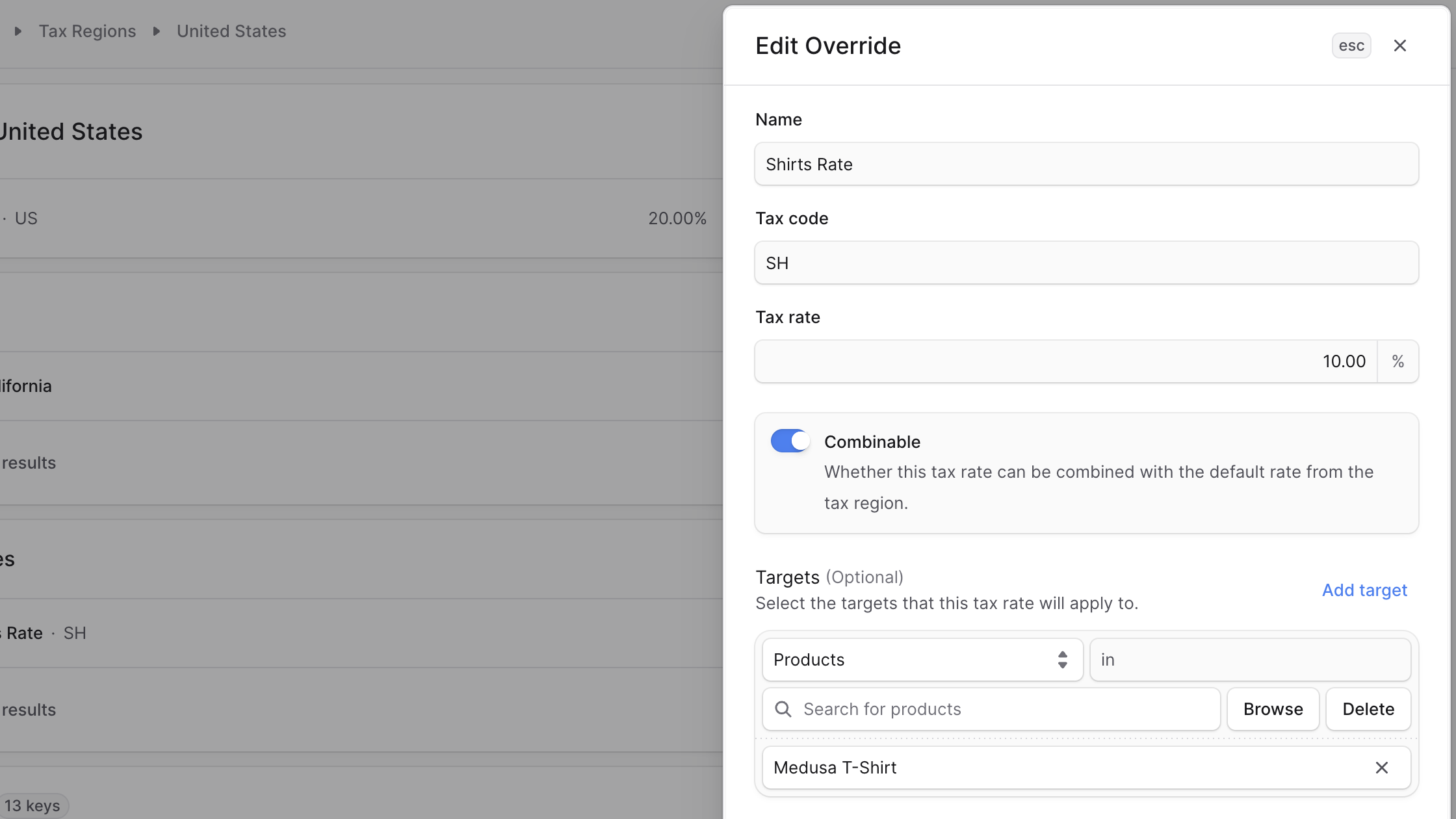
- In the side window that opens, edit the override's name, rate, code, and whether the tax rate should be combined with the default rate. You can also edit the targets of the override.
- When you're done, click Save.
Delete Tax Rate Override
Deleting a tax rate override is irreversible.
To delete a tax rate override:
- Go to the region's details page.
- In the Overrides section, click the three-dot menu next to the override you want to delete.
- Choose Delete from the dropdown.
- Confirm by clicking Delete in the pop-up.
Sublevel Tax Regions
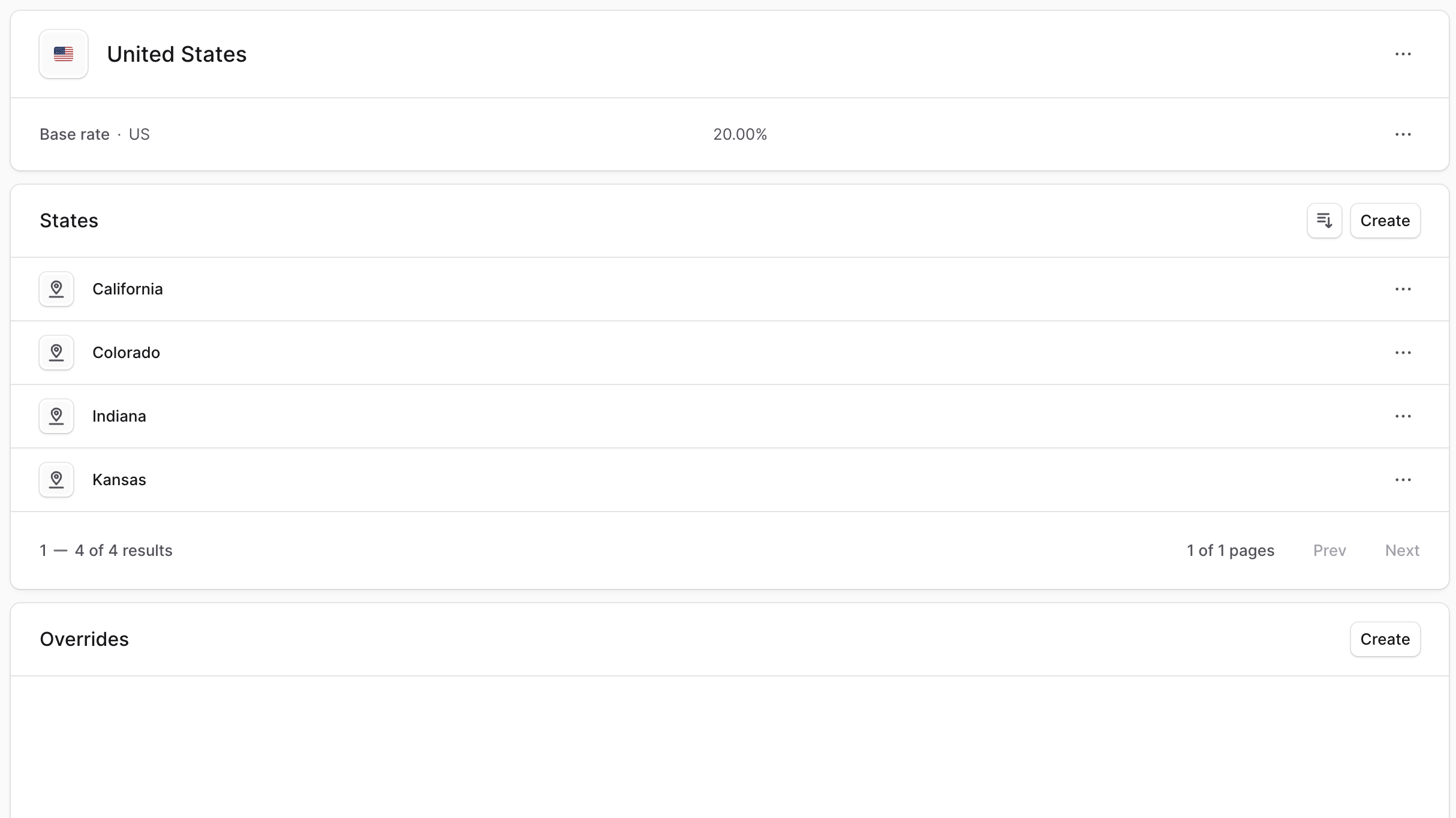
Tax regions for some countries, like the United States, have a States, Province, or Cantons section on the tax region details page. Here, you can add sublevel regions for the country.
You can also enable sublevel regions for other countries that don't show this section by default. For those countries, you'll find a note at the top of the page where you can enable sublevel regions.
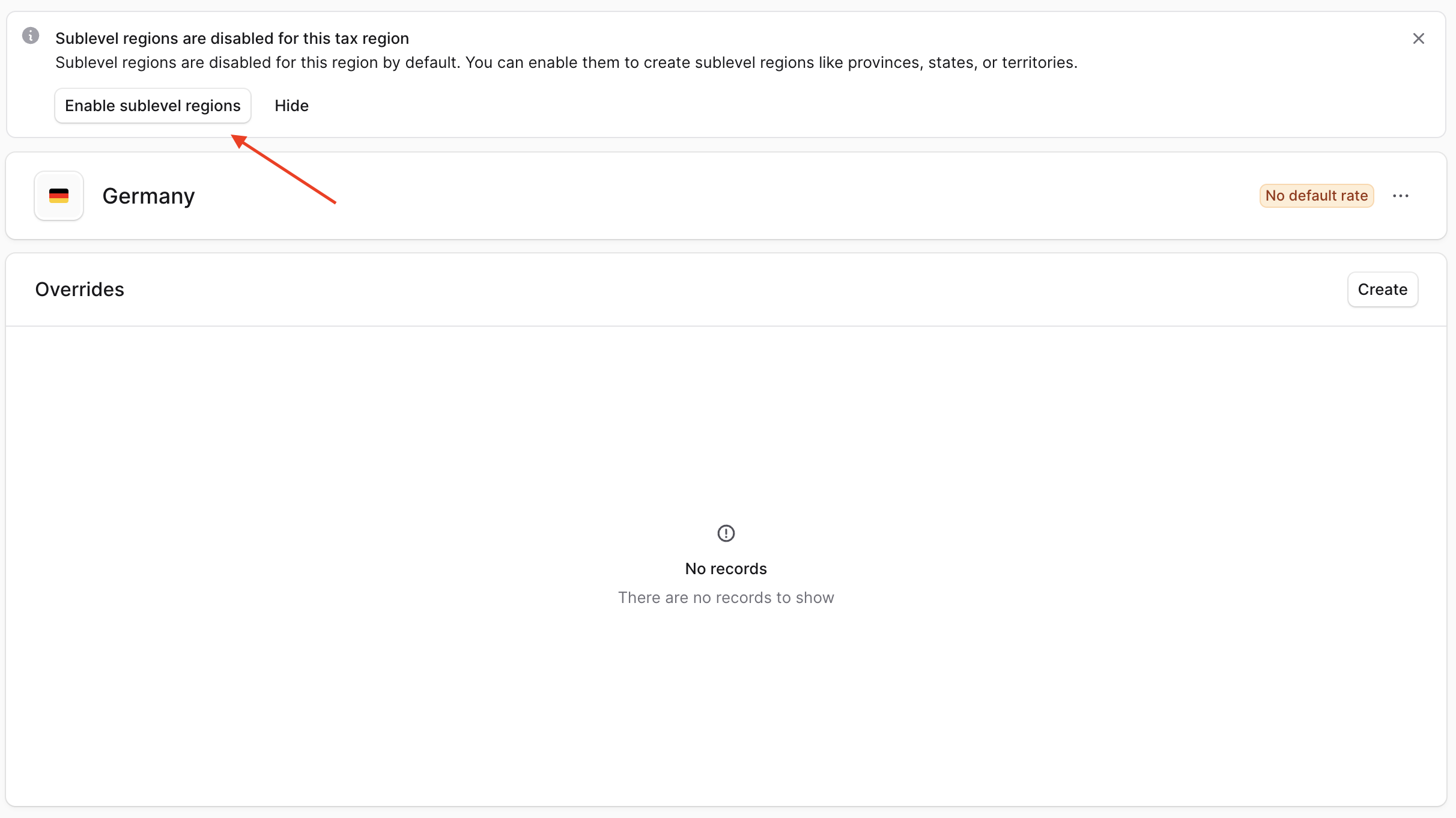
After enabling this setting, you'll find a Sublevels section on the tax region details page where you can add sublevel regions.
Create Sublevel Tax Region
To create a sublevel tax region in a tax region:
- Go to the tax region's details page.
- In the Sublevels section or its equivalent (such as States, Province, or Cantons), click Create.
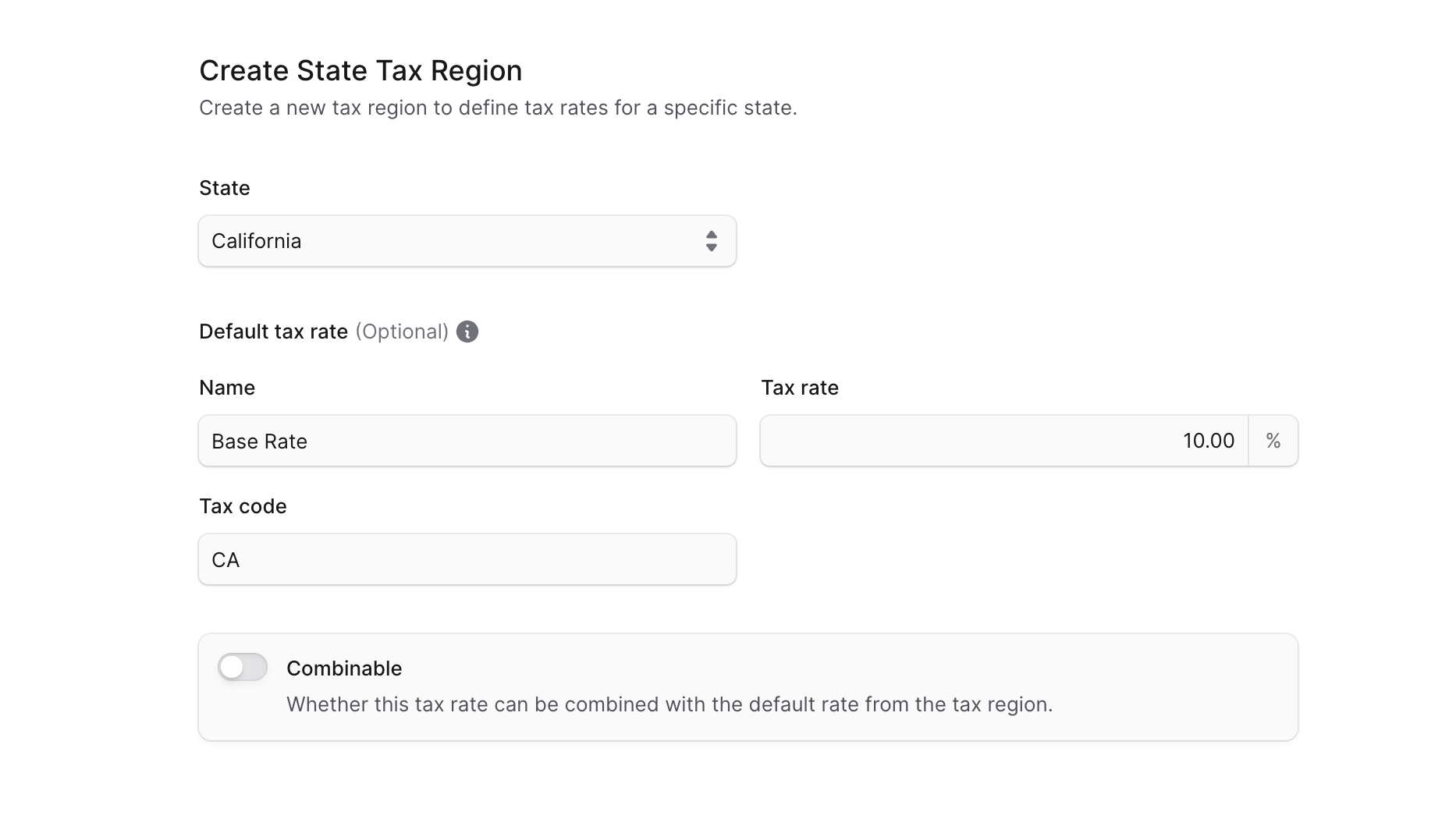
- In the form that opens:
- If the country supports a sublevel by default, select a state, province, or canton.
- If the country doesn't support a sublevel by default, enter the lower-case ISO 3166-2 code of the sublevel.
- Under Default tax rate, optionally enter a name, tax rate, and tax code.
- If the sublevel tax region's rates should be combined with the parent's rates, enable Combinable.
- When you're done, click Save.
View Sublevel Tax Region Details
To view the details of a sublevel tax region:
- Go to the tax region's details page.
- Under the Sublevels section or its equivalent, click a sublevel tax region.
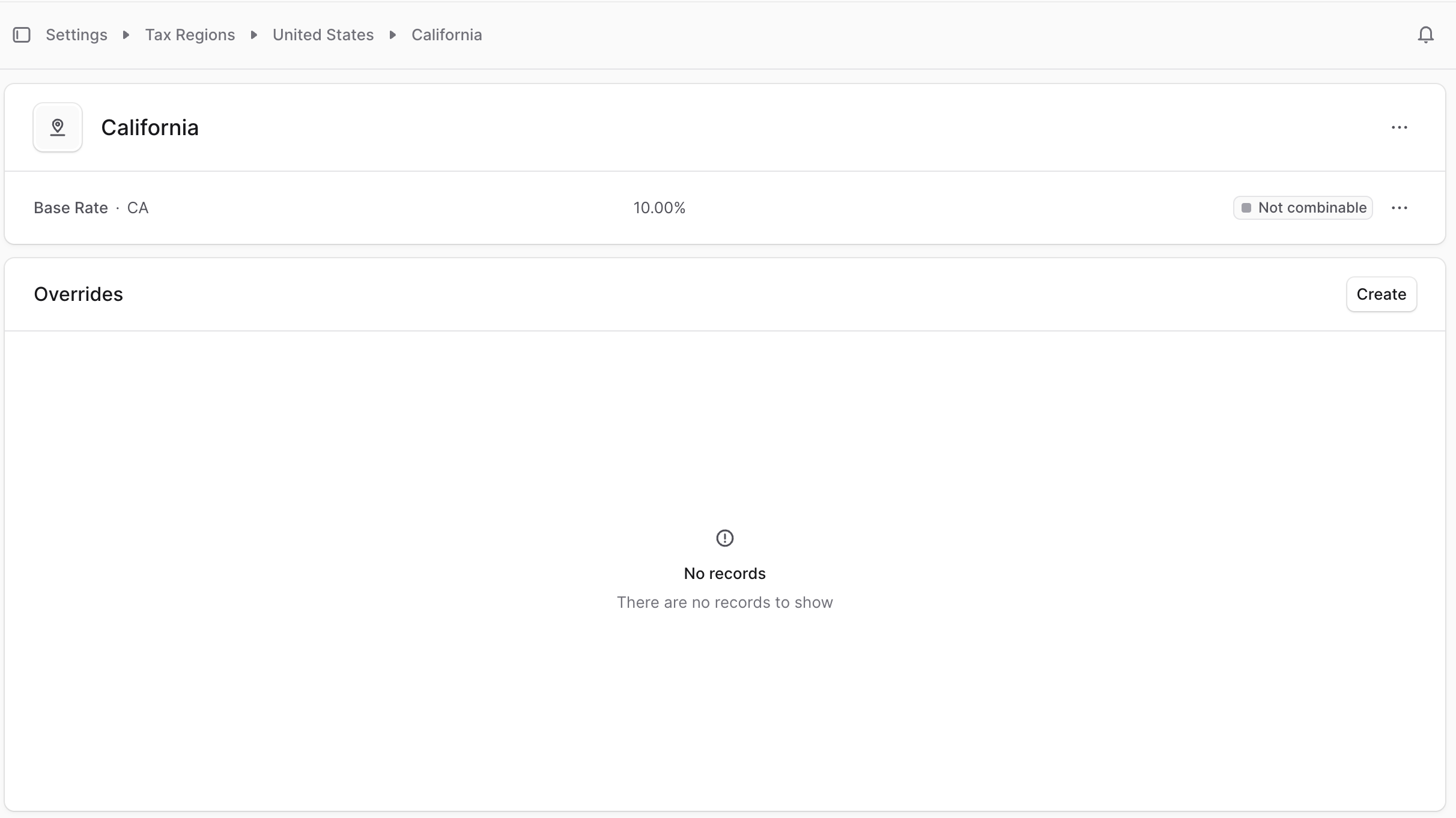
This opens the sublevel tax region's details page, where you can also manage the sublevel tax region.
Manage Sublevel Tax Region's Rates
You can manage the sublevel tax region's default and override rates the same way you manage the parent tax region's rates.
Delete Sublevel Tax Region
Deleting a sublevel tax region is irreversible.
To delete a sublevel tax region:
- Go to the sublevel tax region's details page.
- Click the three-dot menu in the sublevel tax region's row.
- Choose Delete from the dropdown.
- Confirm by clicking Delete in the pop-up.
Delete Tax Region
Deleting a tax region is irreversible.
To delete a tax region:
- Go to the tax region's details page.
- Click the three-dot menu in the tax region's row.
- Choose Delete from the dropdown.
- Confirm by clicking Delete in the pop-up.